01
Why pigment is so stubborn.
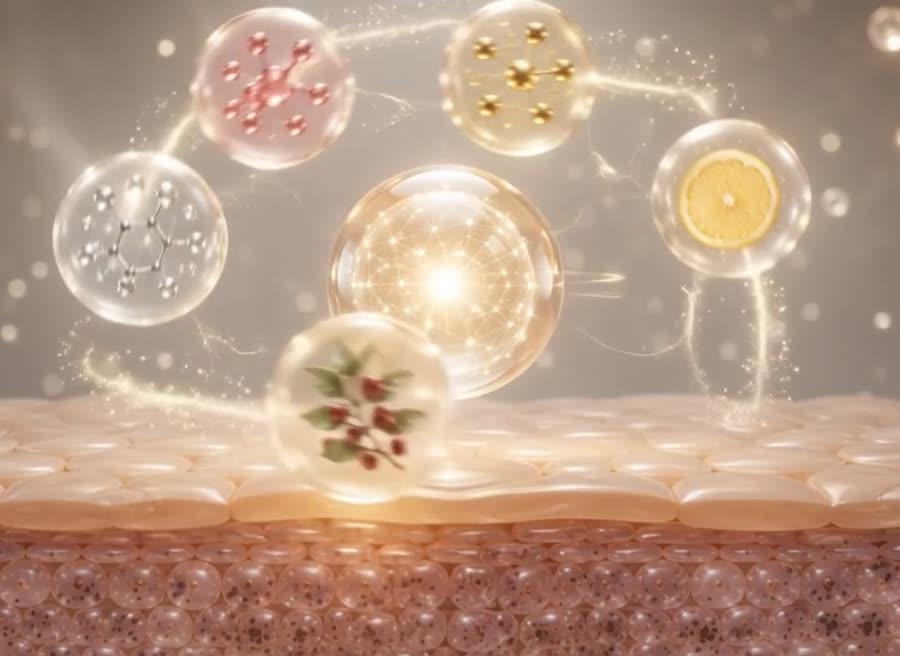
Pigment is made by melanocytes sitting at the base of your epidermis, roughly one melanocyte serving about 36 keratinocytes around it. That unit is the reason a single melanocyte can darken a visible patch of skin.
Inside the melanocyte, pigment is manufactured in packets called melanosomes. The rate-limiting step is an enzyme called tyrosinase, which converts the amino acid tyrosine through DOPA to dopaquinone, and onward into melanin. Those melanosomes are then pushed along the melanocyte's arms and handed off into surrounding keratinocytes, where they park above the cell nucleus like a parasol. That handoff is why pigment becomes visible.
It is triggered by more than sunbathing: UVA and UVB, visible light (particularly relevant for deeper skin tones), heat, hormones, and, critically, inflammation. Any insult that inflames skin can leave a mark behind: post-inflammatory hyperpigmentation.
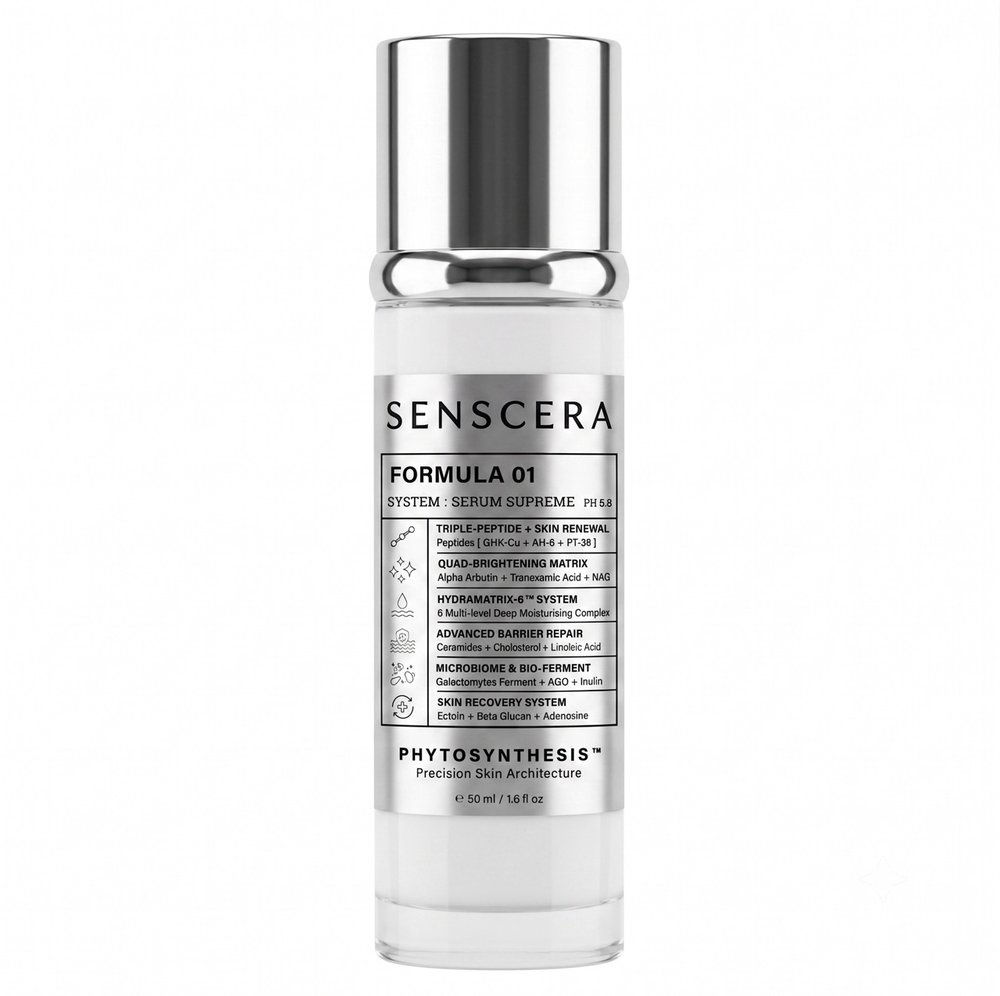
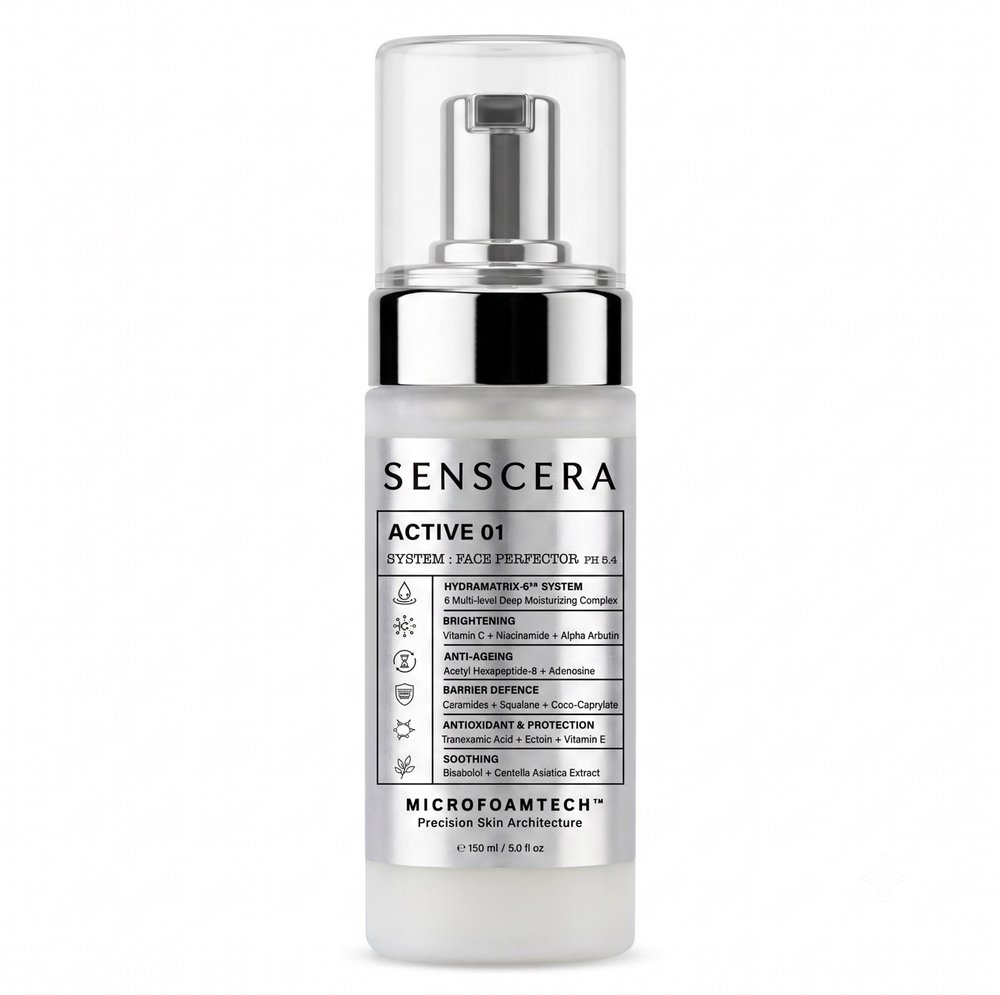
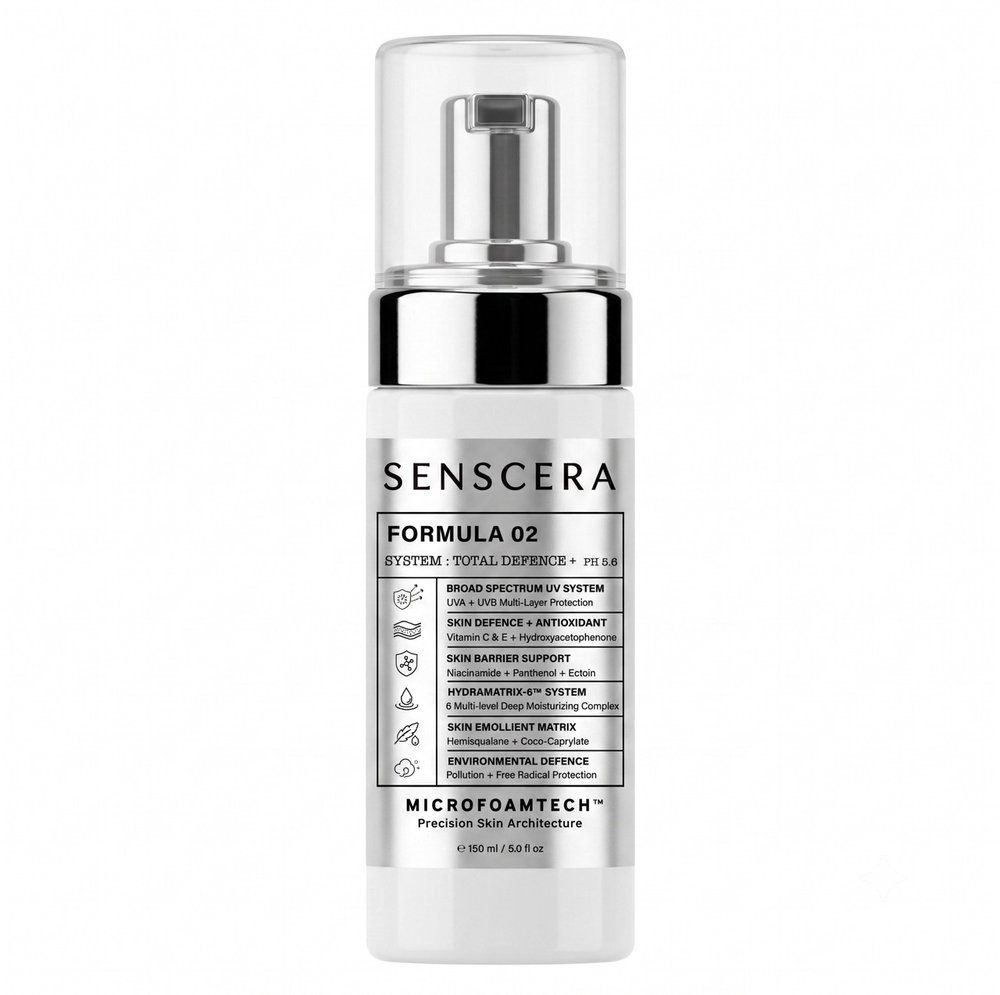
Now the trap. Most brightening products attack one step, usually tyrosinase, at the highest dose they can get away with. But blocking synthesis does nothing about melanosomes already handed to keratinocytes, or pigment already sitting at the surface, or the inflammation that keeps re-triggering the whole cascade. Worse: high-dose single agents tend to irritate, and irritation causes pigmentation. You can genuinely make the problem worse while doing something about it.
That is the case for spreading the work across several pathways at moderate doses instead of forcing one pathway at a high one.
4pigment pathways addressed simultaneously
5molecules, each at a tolerable dose
~1:36melanocyte to keratinocyte ratio, why one cell darkens a patch
8–12 wksrealistic window for visible change