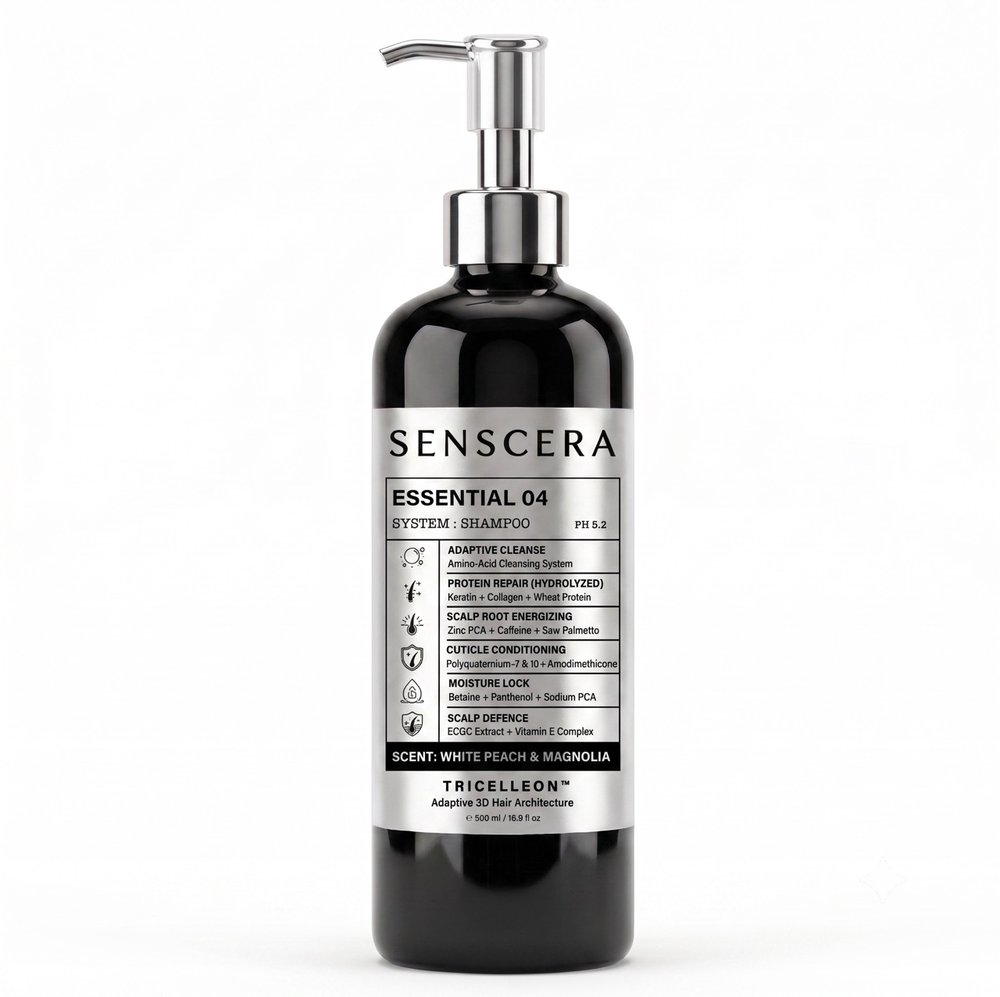
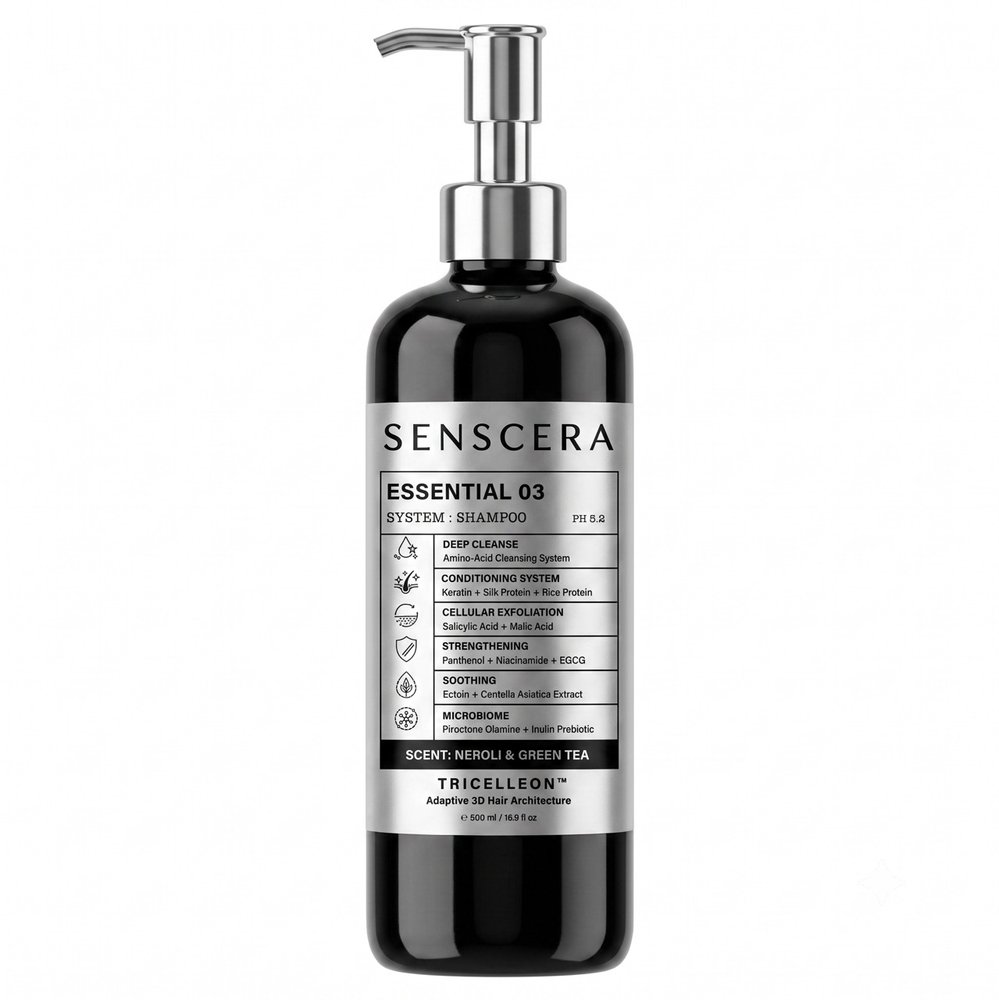
Hair architecture

Tricelleon

Scalp, cuticle, cortex. One adaptive system.

Hair is not a single material with a single problem. It is a scalp that behaves like skin, a cuticle that behaves like armour, and a cortex that carries all the strength. Tricelleon addresses all three in one step, because they fail together.

Scroll to explore
In 30 seconds
The problem

Scalp is skin and needs real cleansing. Damaged ends need the opposite. One formula normally compromises both, or you buy three products and apply them perfectly.

The mechanism

Damage makes hair negatively charged, so conditioning agents deposit where the damage is. Proteins are sized for cuticle or cortex. Acidic pH keeps scales lying flat.

Why it's worth it

Clean scalp, protected ends, shine that's structural rather than sprayed on, and no weight dragging down fine roots.

Read the full breakdown
01

Why hair products contradict each other.

A hair fibre is a coil of keratin (the cortex) wrapped in five to ten overlapping layers of flattened scales (the cuticle), growing out of what is, biologically, skin.

Virgin hair is water-repellent, and there is a specific reason: a lipid layer called 18-MEA is covalently bound to the cuticle's outer surface. It is why healthy hair feels smooth, separates cleanly and does not tangle.

Damage, bleach, heat, UV, friction, does two things. It oxidises the disulfide bonds that give the cortex its strength, converting them into cysteic acid, and it strips 18-MEA. The fibre flips from water-repellent to water-attracting and its surface becomes increasingly negatively charged. Scales lift. Friction climbs. Hair tangles, snaps and goes dull, dullness is simply lifted scales scattering light instead of reflecting it.

Here is the contradiction most ranges never resolve. Scalp wants one thing, lengths want another. Scalp is skin: it has sebum, a microbiome and a pH around 4.5–5.5, and it needs genuine cleansing. Damaged mid-lengths and ends need deposition and protection. A shampoo aggressive enough to clean a scalp properly will strip ends; a formula rich enough to repair ends will leave a scalp greasy and flat.

The usual answer is to sell you three products and hope you apply them in the right places. Tricelleon's premise is that the fibre's own chemistry can be used to route the right treatment to the right zone automatically.

3zones addressed in one step, scalp, cuticle, cortex
5–10overlapping scale layers in a healthy cuticle
~3.67hair's isoelectric point, why acidic pH keeps cuticles flat
18-MEAthe bound lipid layer damage strips first
02

Charge, size and pH do the routing.

Adaptive means the system does not treat every millimetre identically. It exploits three physical properties of damaged hair so the treatment lands where it is needed.

01STEP 01

Target by charge

Damage makes hair more negatively charged, and damaged sites are the most negative of all. Cationic (positively charged) conditioning agents are electrostatically drawn to exactly those sites. Damaged ends attract more deposition than healthy roots. The targeting is automatic, driven by the damage itself.

02STEP 02

Match by molecular weight

Proteins are chosen by size, not marketing. Small hydrolysed peptides are able to penetrate toward the cortex where strength lives; larger fractions stay at the cuticle, forming a smoothing film. Same ingredient family, two jobs, decided by molecular weight.

03STEP 03

Seal by pH

Hair's isoelectric point sits near 3.67. Formulating acidic, around pH 5.2, keeps the fibre's net charge low and the cuticle scales lying flat. Flat scales mean less friction, less tangling and more light reflected, which is what shine physically is.

Damaged hair tells the formula where to go.

Charge-targeted deposition means the most damaged sections attract the most treatment, without you having to apply three products to three zones.

03

Three zones. One pass.

Scalp, cuticle and cortex have different chemistry and different needs. Tricelleon addresses each with molecules suited to it.

01Zone 01

Scalp

INCI · Zinc PCA · Piroctone Olamine · Niacinamide · Inulin
It is skin, treat it as skin

Sebum regulation, microbiome balance and comfort, at a pH the scalp recognises. Amino-acid cleansing systems remove build-up without stripping the barrier, because a scalp barrier behaves like a facial one, and reacts like one when you strip it.

Works at
02Zone 02

Cuticle

The armour and the shine

Cationic agents deposit selectively at negatively charged damage sites, smoothing lifted scales and replacing some of the slip that stripped 18-MEA used to provide. Lower friction means less breakage during brushing, and flat, aligned scales are precisely what makes hair look glossy.

Works at
03Zone 03

Cortex

INCI · Hydrolysed Keratin · Arginine · Peptide Complex
Where strength actually lives

Low-molecular-weight hydrolysed proteins and amino acids are sized to move toward the cortex rather than sit on the surface, supporting the keratin structure that carries the fibre's tensile strength. Surface conditioning makes hair feel better; this is the part that addresses why it snapped.

Works at
04

One pass versus three products.

The alternative to an adaptive system is a routine that asks you to do the routing manually, and most people, reasonably, do not.

Conventional routineTricelleon
Scalp and endsCompromise formula, or three productsCharge-targeted, each zone gets what it needs
DepositionUniform, healthy hair gets the same as damagedConcentrates where damage is greatest
Protein useOne size, marketing-ledSelected by molecular weight for cuticle or cortex
pHOften neutral or alkalineAcidic (~5.2), keeping cuticle scales flat
Result on fine hairConditioning weighs it downDeposits where needed, so roots stay light

Why 'strengthening' usually means 'coating'

Most products described as strengthening are conditioning the surface. They reduce friction so less hair breaks, which is genuinely useful but is not the same as supporting the structure that failed. Real strength is a cortex question, and the cortex is only reachable by molecules small enough to get there. That is why molecular weight, not ingredient name, is the honest measure of a repair claim.

05

What this actually means for your hair.

A clean scalp and ends that survive it. The oldest compromise in haircare, resolved by routing rather than by splitting the difference.

Less breakage where it actually happens. Lower friction at the cuticle plus support at the cortex addresses both the cause and the consequence.

Shine that is structural, not sprayed on. Flat, aligned cuticle scales reflect light. That is real shine, not silicone gloss sitting on top.

Weightlessness on fine hair. Because deposition follows damage, roots do not get conditioning they never needed.

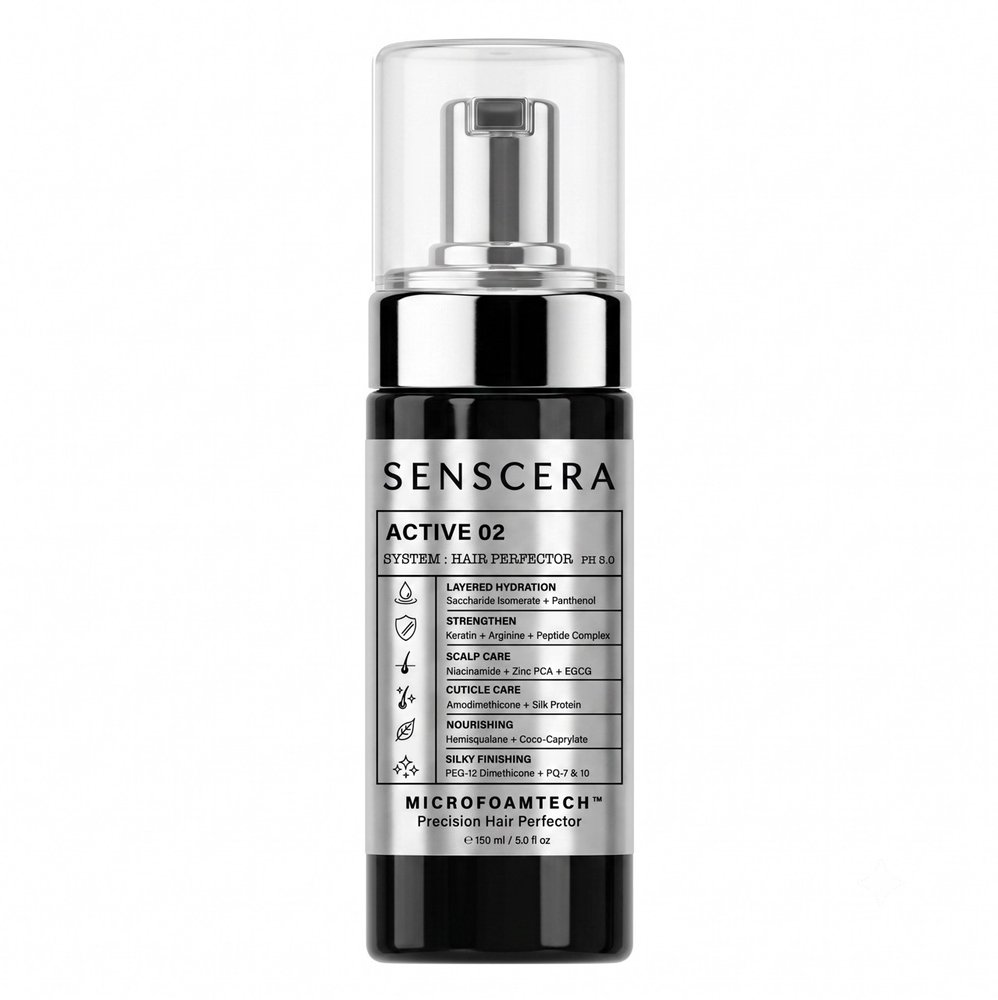
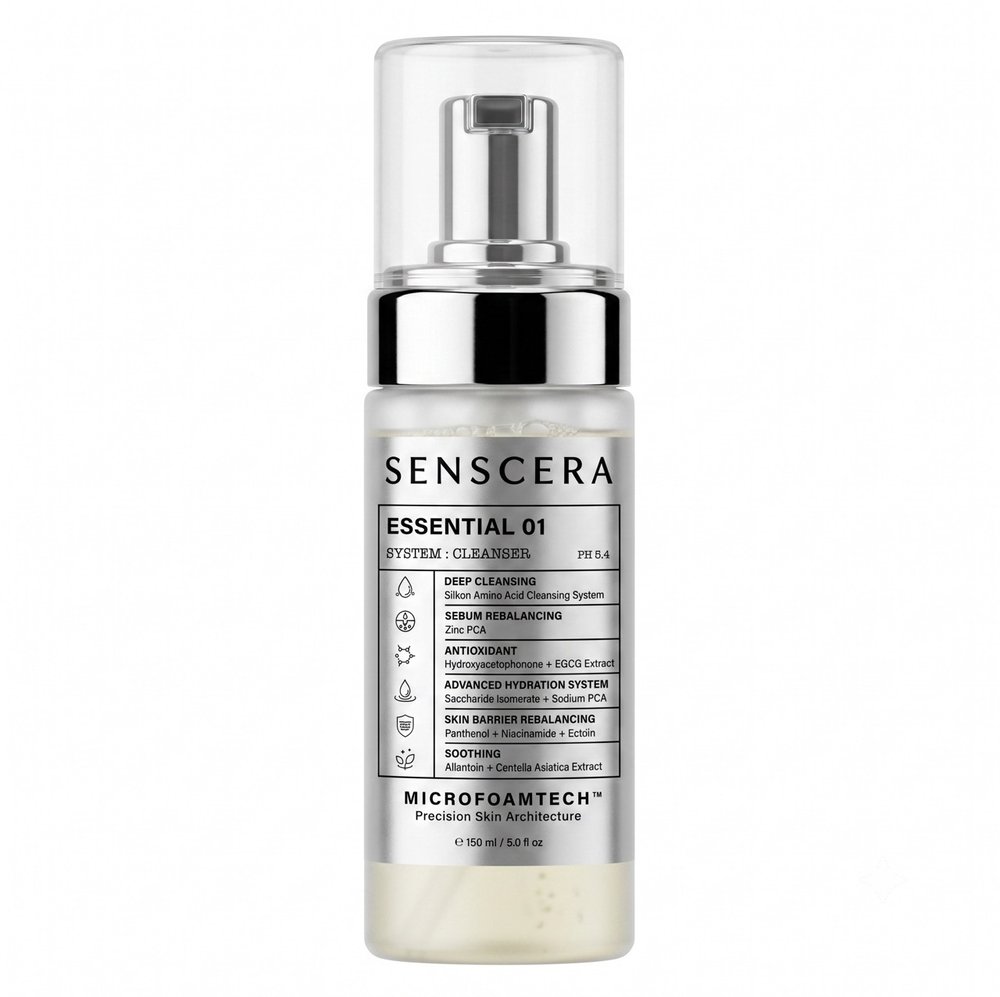
The rest of the architecture.

Each system solves one problem completely. Together they are why SENSCERA formulas behave the way they do.

Hair is three problems. It deserves one intelligent answer.

Tricelleon is the architecture under SENSCERA haircare, cleansing, strengthening and conditioning in a single, adaptive step.

The mechanisms described on this page reflect published cosmetic-science literature on the individual ingredients and the design principles of the Tricelleon™ system. Cosmetic products support the appearance and condition of skin and hair; they are not intended to diagnose, treat, cure or prevent any disease. Individual results vary. If you have a persistent or medical concern, please consult a qualified professional.