Best within a layered hydration system alongside other humectants (glycerin, polyglutamic acid, sodium PCA) and sealed by an emollient so its water is held rather than lost. Universally compatible with actives.
Hydration · Established
Sodium Hyaluronate
INCI: Sodium Hyaluronate · the salt of Hyaluronic Acid
HydratesPlumpsSmooths
Not one ingredient but a family. Used across high, medium, low and oligo molecular weights, each hydrating a different depth of skin.
What it is
Sodium hyaluronate is the sodium salt of hyaluronic acid, the water-binding molecule your own skin produces in abundance when young. It is more stable and more readily absorbed than the acid form, which is why serious formulas use it. A single hyaluronic acid molecule can hold up to a thousand times its weight in water. But the single most important and most overlooked fact about it is that its behaviour changes completely with its size. A generic 'hyaluronic acid' on an ingredient list tells you almost nothing. What matters is the molecular weight, and the best formulas use several at once.
How it works
Attracts and binds water
As a humectant it draws water and holds it in place, immediately plumping the look of fine lines and giving skin a smooth, supple, hydrated surface.
Works at multiple depths
Because it is used across a spectrum of molecular sizes, it hydrates at several levels of the skin at once rather than sitting only on top, which is what a single-weight hyaluronic cannot do.
The molecular-weight spectrum, explained
Think of hyaluronic acid molecules as differently sized sponges. The large ones stay near the surface; the small ones travel further in. Using the full range means hydration is delivered in layers rather than at a single level.
- High molecular weight (HMW): the largest fraction. It stays on the surface and forms a light, breathable film that holds water, smooths texture and gives an immediate plumping effect. It also has a soothing, protective quality on the skin surface.
- Medium molecular weight (MMW): a middle ground that bridges surface and deeper hydration, supporting suppleness through the upper layers.
- Low molecular weight (LMW): smaller fragments that travel further into the outer layers of skin, drawing water deeper so hydration is not just skin-surface but held below it, for a longer-lasting, more cushioned feel.
- Oligo-hyaluronic acid (hydrolysed, the smallest): the tiniest fragments, able to reach the deepest into the outer skin. They deliver the most penetrating hydration and support a smoother, more replenished look from within the surface layers.
This is why a formula built on a spectrum of weights outperforms one built on a single type: it hydrates the full thickness of the outer skin at once, surface to depth, instead of forming a film on top and stopping there.
A note on the humectant trap
Any humectant, hyaluronic acid included, pulls water toward wherever the water is. In very dry air with nothing to seal it, a lone humectant can draw moisture up from deeper skin and let it evaporate, leaving skin drier. This is not a flaw in the ingredient, it is a formulation point: hyaluronic acid should always sit within a system that also holds and seals water, which is exactly how SENSCERA's HydraMatrix-6 is built.
The evidence
Hyaluronic acid and its salt are among the most thoroughly studied and universally used hydrating ingredients in skincare, with the strongest, most sophisticated results coming from multi-molecular-weight systems that hydrate at several depths rather than a single-weight formula.
Worth knowing
If an ingredient list simply says 'hyaluronic acid' or 'sodium hyaluronate' with no further detail, you cannot tell what you are getting. The molecular weight, and ideally a blend of them, is what separates a token inclusion from a genuine hydration system.
Found in
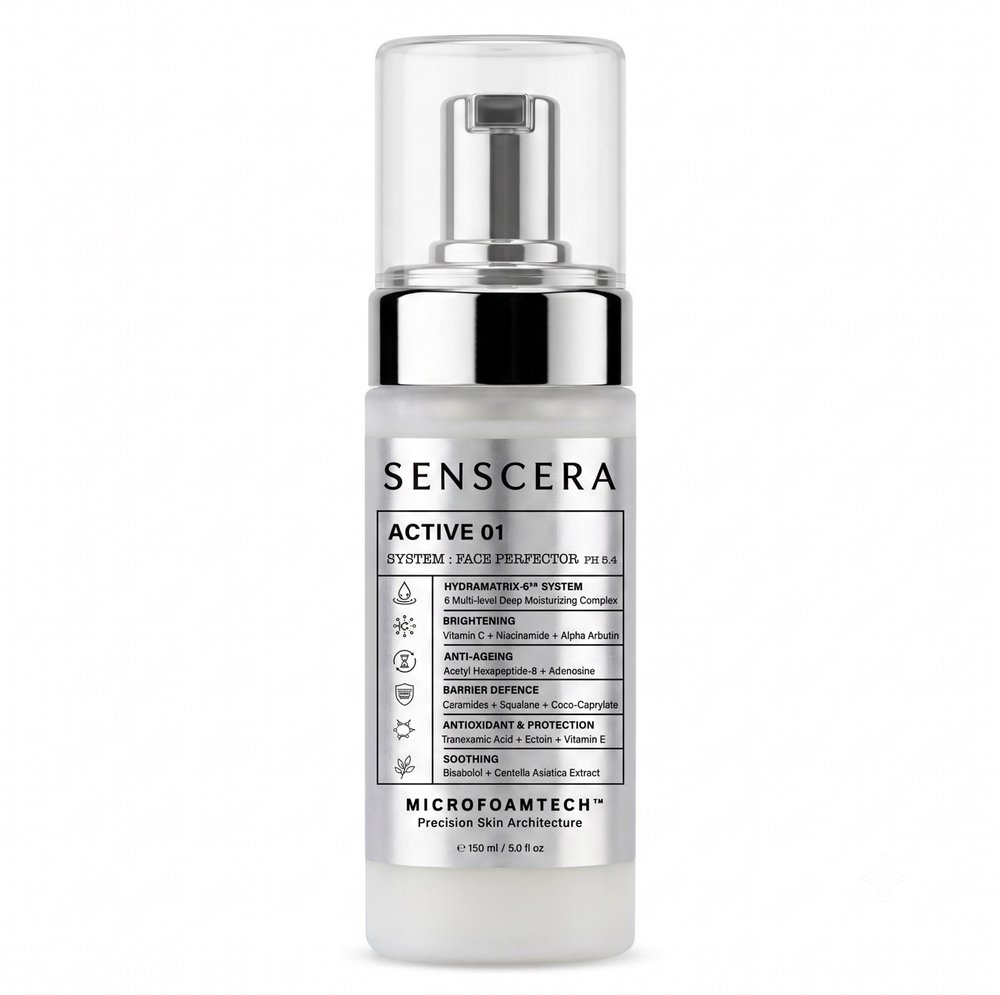
Evidence tiers reflect the general weight of published cosmetic-science literature on this ingredient, not a claim about any individual SENSCERA product. Cosmetic products support the appearance and condition of skin and hair; they are not intended to diagnose, treat, cure or prevent any disease. Individual results vary.